How Wimbledon Uses Money Raised From Debentures
by Ed C

Money raised through Wimbledon debentures is one of the principal sources of long-term capital used to develop and improve the Wimbledon estate.
Debenture funding has supported major projects for more than a century, from the move to Church Road in the 1920s to the redevelopment of Centre Court and No.1 Court.
Today, debenture proceeds continue to form part of the funding available for Wimbledon's capital expenditure programme, alongside other income, cash resources and borrowing.
Who Actually Receives the Money From Wimbledon Debentures?
Wimbledon debentures are issued by The All England Lawn Tennis Ground plc (AELTG), often referred to as the Ground Company.
The Ground Company owns the Wimbledon Grounds and is responsible for major development and capital expenditure across the estate. The Championships themselves are operated separately by The All England Lawn Tennis Club (Championships) Limited.
So, strictly speaking, money raised through new debenture issues is received by AELTG rather than directly by the company staging The Championships.
For an explanation of the underlying five-year financial security and the rights attached to it, see What is a Wimbledon Debenture?
What Is Wimbledon Debenture Money Used For?
The Ground Company's latest published financial statements explain that it is funded on an ongoing basis through:
- an annual facility fee received from The Championships; and
- the issue of Wimbledon debentures.
These resources are used to fund capital expenditure across the Wimbledon estate.
Debenture proceeds can also be used to repay borrowing previously taken out to finance development work. There is therefore not necessarily a direct relationship between one particular debenture payment and one particular construction project.
A better way to think about the system is that debenture issues provide Wimbledon with a substantial recurring source of long-term development capital.
You can review the Ground Company's latest accounts through Wimbledon's official debenture information.
Why Were Wimbledon Debentures Originally Created?
The connection between debentures and the development of Wimbledon dates back to the creation of the present Church Road Grounds.
After the First World War, the original site at Worple Road could no longer accommodate the growing popularity of The Championships.
In 1920, the Ground Company was formed to acquire approximately 13.5 acres at Wimbledon Park and develop a new home for the tournament.
An initial £75,000 debenture issue was increased to £100,000 following strong demand. The capital helped finance the acquisition and development of the Church Road site, where The Championships were first staged in 1922.
A Funding Model That Has Lasted More Than a Century
The original issue established a financing model that Wimbledon has continued to use for more than 100 years.
In 1948, for example, a further debenture issue helped fund repairs following wartime damage as well as improvements to Centre Court and its catering facilities.
Successive Centre Court debenture series have since provided capital for major development projects, with No.1 Court later establishing its own debenture programme.
Wimbledon's historical records describe debenture income as an important source of funds for capital expenditure on the Grounds.
Which Wimbledon Developments Have Debenture Funds Helped Finance?
Wimbledon's historical records identify numerous major developments supported by debenture funding.
| Year | Development |
|---|---|
| 1979 | Centre Court roof raised and a new Debenture Holders' Lounge constructed on the north side of Centre Court. |
| 1980 | Permanent Members' Enclosure constructed. |
| 1981 | No.1 Court Competitors' Complex rebuilt. |
| 1985 | East Side Centre Court Building constructed. |
| 1986 | New two-storey Pavilion constructed in Aorangi Park. |
| 1989 | Three new covered courts constructed. |
| 1991 | Centre Court North Building extended to provide additional debenture-holder accommodation and offices. |
| 1992 | Centre Court roof replaced. |
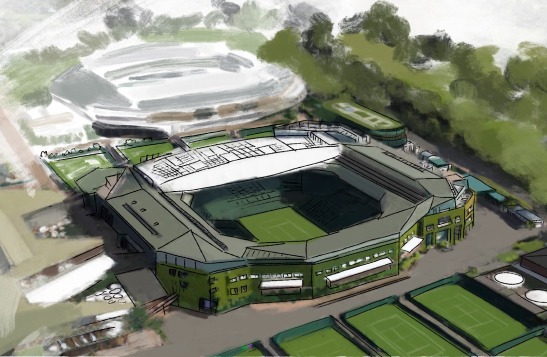
| 2009 | Major Centre Court redevelopment, including the retractable roof, together with the new No.2 Court. |
| 2019 | Redevelopment of No.1 Court, including its retractable roof. |
Source: Wimbledon historical records and published debenture information.
The important point is that debenture funding has not simply paid for facilities used by debenture holders. It has contributed to infrastructure used by players, spectators, officials, broadcasters and the wider operation of The Championships.
Did Debenture Money Help Pay for the Wimbledon Roofs?
Yes. The redevelopment of both Centre Court and No.1 Court provides clear examples of debenture capital contributing to major Wimbledon infrastructure.
Centre Court
The extensive Centre Court redevelopment culminating in the opening of its retractable roof in 2009 was supported by debenture funding.
The project also increased capacity, improved seating and upgraded spectator and catering facilities.
No.1 Court
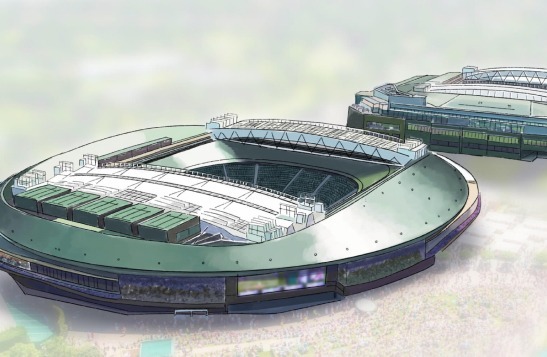
No.1 Court subsequently underwent its own major redevelopment, including the installation of its retractable roof, which became operational in 2019.
The project gave Wimbledon a second major stadium capable of continuing play during wet weather.
These projects demonstrate why it is misleading to think of debenture proceeds simply as payment for premium seating privileges. The capital forms part of the funding used to develop the wider Wimbledon estate.
How Much Did the 2026-2030 Centre Court Debenture Issue Raise?
The successful 2026-2030 Centre Court debenture issue raised approximately £238.2 million, according to Wimbledon's published records.
A total of 2,520 Centre Court debentures were issued for the five Championships from 2026 to 2030.
The £238.2 million figure is not simply 2,520 multiplied by the headline price paid by each debenture holder. The published amount is reported net of items including VAT, nominal value and issue expenses.
This distinction is important when comparing the price paid by individual debenture holders with the capital ultimately available to the Ground Company.
How Does Wimbledon Use Borrowing Alongside Debenture Money?
Major construction projects often require funding before the proceeds of the next debenture issue have been received.
The Ground Company can therefore use borrowing to finance development work and later use debenture proceeds to repay that financing.
A recent example is the financing originally arranged for the No.1 Court redevelopment and other Wimbledon Master Plan projects.
As proceeds from the 2026-2030 Centre Court debenture issue were received, part of the money was used to reduce this borrowing.
The £50 million term-loan element was repaid in full in June 2024, with the remaining revolving credit facility subsequently reduced further.
By 31 July 2025, the Ground Company's accounts reported no amount drawn under the remaining revolving facility.
This illustrates how the funding cycle can work in practice:
- Wimbledon undertakes or plans major capital projects.
- Borrowing can provide capital when expenditure is required.
- Future debenture proceeds provide a substantial source of cash.
- Those proceeds can then help finance further investment or repay development borrowing.
What Is Wimbledon Investing In Now?
The Ground Company's latest published accounts describe a continuing programme of substantial capital expenditure across the estate.
Recent and ongoing projects have included:
- redevelopment and expansion of the Millennium Building;
- improvements to player, Member and media facilities;
- expansion and refurbishment of No.1 Court debenture areas;
- changes to the southern Grounds to improve spectator movement and viewing;
- additional underground operational space;
- new covered and clay courts west of Somerset Road; and
- redevelopment of The Hill.
The Ground Company reported £49.5 million of capital expenditure in the year to 31 July 2025.
The Millennium Building project is one of the largest current developments and is intended to provide substantially expanded and improved facilities.
For the underlying figures, see the AELTG Annual Report and Financial Statements for the year ended 31 July 2025.
What About the Wimbledon Park Project?
Wimbledon's longer-term estate strategy also includes development of the former Wimbledon Park Golf Club land opposite the existing Grounds.
The plans include new grass courts, a new Show Court and bringing the Wimbledon Qualifying Competition onto the expanded Wimbledon site, together with substantial publicly accessible parkland.
The project has received planning permission, although legal proceedings concerning the land have continued.
It remains important not to imply that a particular debenture issue has been exclusively earmarked for the Wimbledon Park Project.
Debenture proceeds form part of the Ground Company's overall capital funding alongside other resources.
Is Each Debenture Issue Ring-fenced for a Particular Project?
No, not necessarily.
The Ground Company manages its overall capital programme using debenture proceeds, facility-fee income, cash resources and borrowing.
This allows expenditure to take place when projects require it rather than waiting for the proceeds of a particular future debenture issue.
Where Wimbledon has specifically linked debenture funding to a particular development, that relationship can be identified. Otherwise, it is more accurate to say that debenture proceeds contribute to the wider capital-investment programme.
Does Debenture Money Pay Wimbledon Prize Money?
Debenture capital should not be confused with the operating income generated by The Championships.
The Ground Company's role is principally to own and develop the Wimbledon estate, while The Championships generates operating income from sources including broadcasting, sponsorship, ticketing and hospitality.
Debenture proceeds therefore form part of a different financial structure from the revenues used to stage the tournament and fund areas such as player prize money.
Do Debenture Holders Own Part of Wimbledon?
No. Owning a Wimbledon debenture does not make the holder a shareholder in the All England Club or give them ownership of part of the Wimbledon Grounds.
The debenture is a financial security carrying specified Championship rights for its five-year series.
For the legal and financial structure of the instrument, see our Wimbledon debenture guide.
Why Are Debentures So Important to Wimbledon?
The significance of the debenture programme goes well beyond providing premium seats to holders.
For more than a century, it has provided Wimbledon with a substantial source of capital that can be reinvested in the estate.
That funding model has contributed to new courts, retractable roofs, player facilities, spectator facilities and other major redevelopment projects.
The Ground Company's latest accounts continue to identify debenture issues as one of its ongoing sources of funding for capital expenditure.
For the investment case from the holder's perspective rather than Wimbledon's use of the money, see Are Wimbledon Debentures a Good Investment?
For current official information and the Ground Company's latest financial statements, visit Wimbledon's official debenture information.
Experience Wimbledon's Debenture Facilities Yourself
You can enjoy Wimbledon's debenture seating and facilities without buying the underlying five-year debenture. Individual tickets combine a reserved Centre Court or No.1 Court seat with access to the appropriate debenture bars and lounges.
Browse Wimbledon 2027 tickets from verified holders, compare prices and make an offer or buy now.
Browse Wimbledon Debenture Tickets
Need Help?
Need help? Visit our FAQs or contact us.
News and articles

October Tennis Round-Up & November Preview: Wimbledon 2027
Wimbledon No.1 Court Guide